
In the heart of Corfu Town, you will find the Spianada, the largest square in Greece. At 42,000 square metres, it is ranked 27th largest in the world. First created in 1516 by the Venetians and later expanded in 1537. Its configuration altered in 1628,…
Read MoreCorfu to Albania Day Trip: 3 Easy Itineraries (2027)
29 Nov, 2026Albania is closer than most Corfu visitors realise. From Corfu's New Port, Saranda is just 15 nautical miles across the strait, and our Flying Dolphins make the crossing in 30–45 minutes. That makes a day trip to Albania one of the easiest ways to add a second country to your holiday.
You can visit Albania in a day from Corfu. Take a morning ferry to Saranda, spend 6–9 hours exploring, and catch an evening boat back. Between May and October there are several sailings a day in each direction. Bring a passport or EU ID card and some cash in Albanian lek.
Below are three itineraries we recommend, from an easy beach-and-history day to a longer trip inland to a UNESCO-listed stone town.
Getting from Corfu to Albania by ferry
Ionian Seaways sails daily between Corfu New Port and Saranda all year. For a day trip, choose the high-speed Flying Dolphin (30–45 minutes); the car ferry takes 55–70 minutes. Book online up to 24 hours before departure and go straight to the international passenger terminal with your printed ticket.
Remember the time difference. Albania is one hour behind Greece. Departures are always shown in local time, so a 08:30 boat from Corfu reaches Saranda at around 08:10 Albanian time.
How long you get in Albania, by season (based on our current timetable; check the Timetable for your date):
| Travel dates | Earliest boat from Corfu (Greek time) | Last boat back from Saranda (Albanian time) | Time in Albania |
| March to April | 09:00 | 16:00 | about 6 hours |
| May | 09:00 | 18:00 | about 8 hours |
| June to September | 08:30 | 20:00 | about 10–11 hours |
| 1–15 October | 08:00 | 18:00 | about 9 hours |
| 16 October to 10 November | 09:00 | 16:00–18:00 | about 6–8 hours |
| Mid-November to early March | 09:00 | 10:00 (14:00 Fri & Sat) | not practical as a day trip |
Time in Albania allows one hour to check in for the return boat.
What to bring
• EU citizens: a valid ID card or passport.
• Everyone else: a passport. Albania is not in the EU or Schengen, so you pass passport control in both directions. If you need a Schengen visa, it must be multiple-entry so you can return to Greece.
• Non-EU travellers: since April 2026 the EU’s Entry/Exit System (EES) records your fingerprints and photo when you re-enter Corfu. Allow extra time at the terminal.
• Travelling with under-18s: if a child is not travelling with both parents, bring the signed authorisation described on our Useful Information page.
• Hire cars: cars rented on Corfu cannot be taken to Albania. For a day trip you will not need one.
Itinerary 1: Butrint and Ksamil (history and beaches)
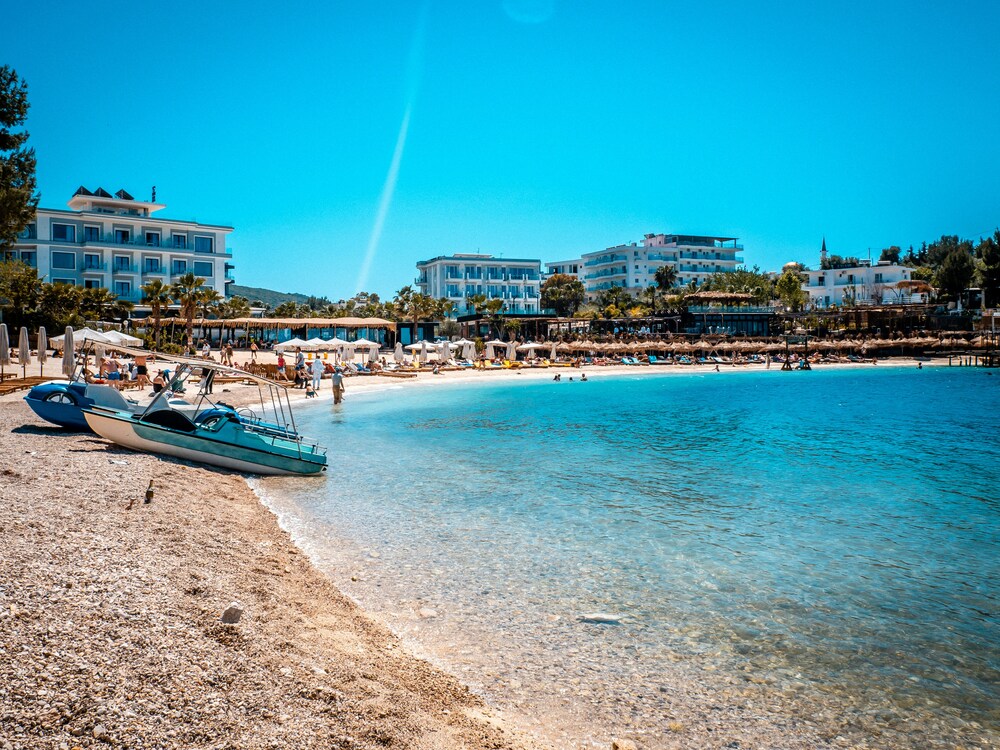
Best for: first-timers, families and anyone who wants ancient ruins in the morning and turquoise water in the afternoon. Difficulty: easy, by local bus or taxi.
Butrint is a UNESCO World Heritage Site and the most important archaeological park in Albania. Greeks, Romans, Byzantines and Venetians all built here, on a wooded peninsula beside the Vivari Channel, about 18 km south of Saranda. Ksamil, 4 km before Butrint on the same road, is famous for its white beaches and small islands you can swim or paddle to.
Sample day (summer):
1. 08:30 Fast ferry from Corfu, arriving in Saranda around 08:10 Albanian time
2. 08:30 Take the Saranda–Ksamil–Butrint bus from the stop near the port on Rruga Jonianet (about 45 minutes, 200–250 lek, cash) or a taxi.
3. 09:15–12:00 Explore Butrint before the tour groups arrive: the Greek theatre, the baptistery, the Great Basilica, the Lion Gate and the hilltop museum with views over the channel. Allow 2–3 hours.
4. 12:30 Hop back on the bus to Ksamil (10 minutes) for a seafood lunch by the water.
5. 14:00–17:00 Swim, rent a kayak or take a short boat ride to the Ksamil islands.
6. 17:30 Bus or taxi back to Saranda for a stroll along the seafront promenade.
7. 20:00 Last boat back to Corfu.
Good to know:
• Butrint tickets: 1,000 lek per adult, 500 lek for ages 12–18, free under 12. Bring cash in lek; card payment is unreliable.
• Opening hours: 1 April–31 October 08:30–20:00 (last entry 18:00); 1 November–31 March 09:00–17:30 (last entry 15:00).
• Beat the crowds: the quietest hours are 08:30–10:00 and after 15:00. Wear proper shoes and bring water and insect repellent.
• Read more about the site in our post on the Historical Sites of Saranda.
Itinerary 2: The Blue Eye and Saranda (nature and views)
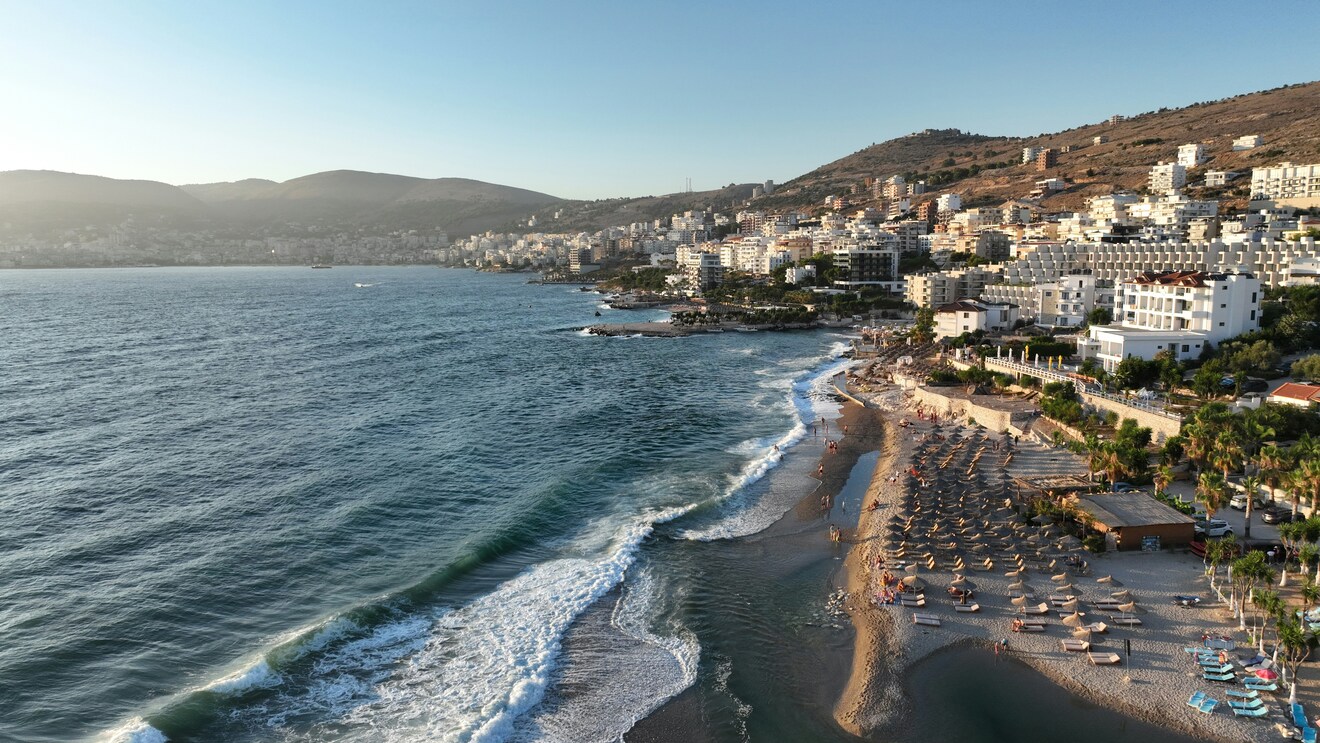
Best for: nature lovers, photographers and anyone who has already seen Butrint. Difficulty: easy by taxi; harder by bus.
The Blue Eye (Syri i Kaltër) is a natural spring where crystal-clear water wells up from a deep hole in the rock, turning the pool an intense blue ringed with green. It sits in oak and plane woods about 22 km inland from Saranda.
Sample day (summer):
1. 08:30 Fast ferry from Corfu to Saranda.
2. 08:30 Taxi from the port to the Blue Eye (30–45 minutes). Agree the price before you set off, including waiting time.
3. 09:15–10:30 Walk the 2 km woodland path to the spring (20–30 minutes each way) and spend half an hour at the viewing platforms. Arriving early beats the midday tour buses.
4. 12:00 Back in Saranda for lunch on the seafront.
5. 14:00 Take a taxi up to Lëkurësi Castle, the hilltop fortress above town, for the best view of Saranda bay and Corfu across the water.
6. 16:00 Stroll the promenade, see the ruins of the ancient synagogue and basilica in the town centre, and stop for a coffee or a swim.
7. 18:00 or 20:00 Boat back to Corfu.
Good to know:
• Entrance: 50 lek per person; parking about 300 lek for up to three hours.
• Swimming: officially discouraged. The water stays around 10°C all year and the current at the spring is strong.
• By bus: Saranda–Gjirokastër buses can drop you at the Blue Eye turn-off on the main road, but it is about an hour’s walk each way to the spring and there are only a few buses a day. A taxi is much easier on a day trip.
• Did you know? Saranda takes its name from the Monastery of the Forty Saints (Agioi Saranta in Greek), whose ruins stand on a hill above the town.
Itinerary 3: Gjirokastër (the City of Stone)
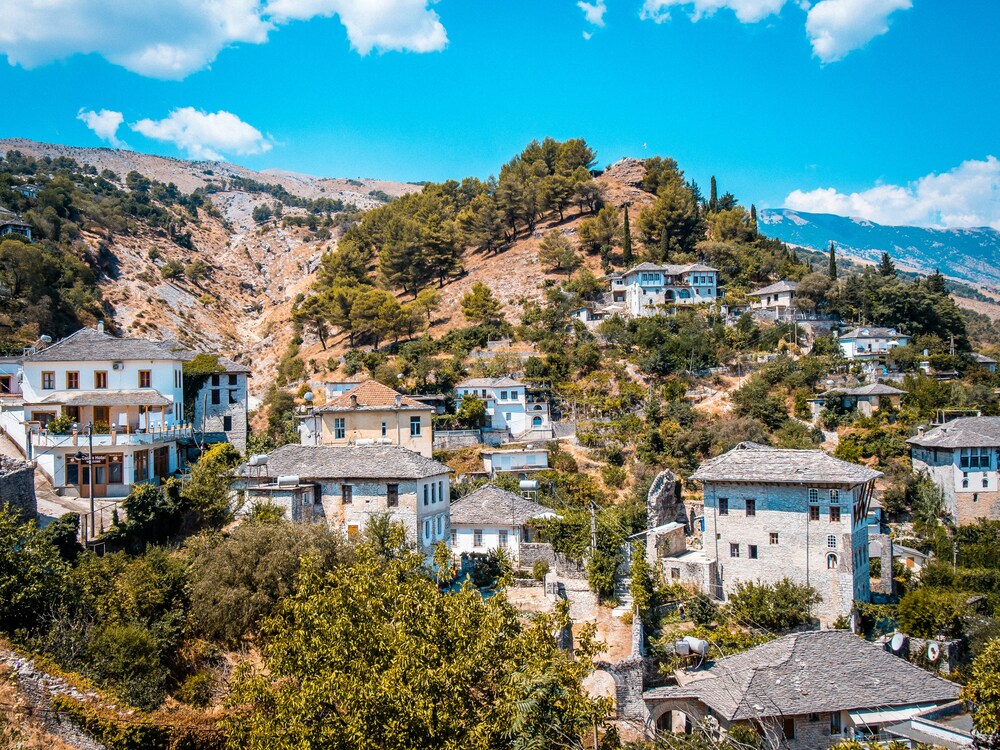
Best for: history and architecture fans, and travellers who want to see inland Albania. Difficulty: a long but rewarding day; best from June to September, when the last boat back leaves at 20:00.
Gjirokastër is a UNESCO-listed Ottoman town of grey stone houses climbing a hillside below a huge castle, about 53 km (a 1–1¼ hour drive) inland from Saranda. Its steep cobbled lanes and old bazaar feel a world away from the coast.
Sample day (summer):
1. 08:30 Fast ferry from Corfu to Saranda.
2. 09:00 Take a taxi to Saranda’s new intercity bus terminal on Rruga Skënderbeu, up the hill above the town centre (about 10 minutes, €10–15; agree the fare first). Catch the 10:00 bus to Gjirokastër (about 1h20, 400–500 lek, cash). Or hire a driver for the day and stop at the Blue Eye on the way.
3. 11:30–13:30 Climb to the castle: the weapons gallery, the valley views and the old US Air Force jet on the ramparts.
4. 13:30 Lunch in the old bazaar. Try qifqi, the local rice balls.
5. 14:30–16:30 Visit the Skenduli or Zekate Ottoman houses, the Ethnographic Museum and the house of writer Ismail Kadare.
6. 16:30–17:00 Head back to the bus station for an afternoon bus to Saranda. Times change by season, so check the return time with the driver when you arrive in the morning. If you miss it, a taxi back to Saranda takes about 1 hour.
7. 20:00 Last boat back to Corfu.
Good to know:
• Buses run only 3–5 times a day and times change by season. Check at the terminal the day before or ask your driver.
• A private driver costs more but gives you flexibility and lets you combine Gjirokastër with the Blue Eye. Agree the price in advance.
• Wear shoes with good grip: the stone streets are steep and slippery.
• For more on Albania’s fortresses, read Castles of Albania.
Money, costs and getting around Saranda
Albania’s currency is the lek (ALL); 1,000 lek is roughly €10. Cash is king outside hotels and larger restaurants, so withdraw lek from an ATM near the port when you arrive. Some places in Saranda take euros, but usually at a poor rate.
Typical day-trip costs (per person):
| Item | Cost |
| Bus Saranda – Ksamil – Butrint (one way) | 200–250 lek |
| Taxi Saranda – Butrint (one way, per car) | 2,000–3,000 lek |
| Butrint entry (adult) | 1,000 lek |
| Blue Eye entry / parking | 50 lek / about 300 lek |
| Taxi port – Saranda bus terminal | €10–15 |
| Bus Saranda – Gjirokastër (one way) | 400–500 lek |
| Sunbed and umbrella in Ksamil (per day) | 1,500–2,500 lek |
For ferry fares, see Booking Info or check prices for your date in our online booking system.
Getting around: local buses run roughly hourly from about 06:30 to 18:30 between Saranda, Ksamil and Butrint, and you pay the driver in cash.
Taxis wait near the port; always agree the fare before you get in.
Frequently asked questions
Can you do a day trip to Albania from Corfu?
Yes. The fast ferry from Corfu to Saranda takes 30–45 minutes, and from spring to autumn there are morning departures and evening returns, giving you 6–11 hours in Albania depending on the season.
How long is the ferry from Corfu to Saranda?
About 30–45 minutes on the Flying Dolphin and 55–70 minutes on the car ferry.
Do I need a passport to go from Corfu to Albania?
EU citizens can travel with a valid ID card or passport. Everyone else needs a passport. Non-EU travellers also have their fingerprints and photo recorded by the EU Entry/Exit System when they return to Corfu.
Is there a time difference between Corfu and Albania?
Yes. Albania is one hour behind Greece. Ferry times are always shown in local time.
What currency should I bring to Albania?
Albanian lek. Many small businesses, buses and the Butrint ticket office take cash only. You can withdraw lek at ATMs near Saranda port.
Can I take my rental car from Corfu to Albania?
No. Cars rented on Corfu cannot be taken to Albania. On a day trip, use the local buses, a taxi or a guided tour instead.
What is the best day trip from Corfu to Albania?
For a first visit, Butrint and Ksamil: a UNESCO-listed ancient city followed by an afternoon on the beach, all reachable by local bus from Saranda port.
When is the best time for a Corfu to Albania day trip?
May, June and September offer long schedules, warm weather and fewer crowds than July and August. From mid-November to early March there is only one sailing a day in each direction, so a day trip is not practical.
You might be interested
04 May, 2021
Historical Sites of Saranda
LËKURËSI CASTLE 4.1 Kilometres from the port of Saranda lies Lekursi Castle, a hilltop castle with imposing round towers and stunning views down across Saranda, Ksamil and Corfu. Built in 1537 by Sultan Suleiman I, commonly known as Suleiman the Magnificent, the castle used to…
Read More